


 Tiếng Việt
You have likely heard the term “Microservices Architecture” mentioned frequently. So, what is it exactly, and what are the advantages that make it such a popular choice? Let’s explore the following analysis:
1. What is Microservices Architecture?
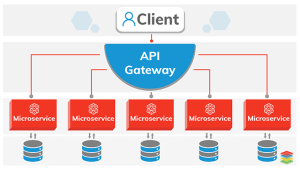
Microservices Architecture is a software architectural style where applications are divided into small, independent, and deployable services. Each microservice is a self-contained unit responsible for a specific capability or function, and it can be developed, deployed, and scaled independently from the rest of the application.
Key characteristics of Microservices Architecture include:
Decomposition
Breaking down the application into specialized, small services that are responsible for specific capabilities or functions. This enhances code organization and maintainability.
Independence
Microservices are designed to have strong isolation. They can be developed, tested, and deployed independently without relying on the rest of the application. Different development teams or management groups can even use different technologies.
Scalability
Microservices can be independently scaled to handle varying loads. This is particularly useful in situations where certain parts of the application need to handle higher loads compared to others.
Technology Diversity
Microservices can be built using different programming languages, frameworks, and technologies, allowing the selection of the best tools for specific service requirements.
Communication
Microservices interact with each other through well-defined APIs, often using lightweight protocols such as HTTP/REST or message queues. This enables them to work together to provide the overall functionality of the application.
Deployment Isolation
Each microservice can be deployed independently, reducing the risk of changes in one service affecting others. This also allows for continuous and frequent deployments.
Resilience
Microservices are designed to be resilient. If one service experiences a failure, it should not bring down the entire application. Failures are isolated and can be gracefully handled.
Scalability
Microservices can be independently scaled based on their specific resource needs. This means you can allocate additional resources to high-traffic services while saving resources for less-used services.
Ease of Maintenance
Smaller codebases are easier to maintain and update, which is particularly beneficial for rapidly changing applications.
Organizational Structure
Microservices are well-suited for small, cross-functional teams, with each team responsible for one or more services. This can improve flexibility and speed up the development process.
While Microservices Architecture brings many benefits, it also presents challenges. These include the complexity of distributed systems, the cost of network communication, and operational complexities. Proper design, testing, monitoring, and DevOps practices are crucial for successfully deploying and managing applications based on Microservices Architecture.
2. Comparison between monolithic and microservice

When deciding between monolithic and microservices architectures, or simply understanding the differences between them, it’s important to consider the following points:
Size and Scope
Monolithic: A monolithic application is built as a single, large, and complex codebase. It includes all features and functionalities within the same project.
Microservice: Microservice applications are decomposed into small, independent services. Each service is responsible for a part of the overall application’s functionality.
Deployment and Scalability
Monolithic: Requires deploying the entire application when changes are made. Scaling often involves adding resources to the entire application.
Microservice: Microservices can be deployed and scaled independently, allowing customized deployment and scaling for each individual service.
Complexity and Maintenance
Monolithic: Easier to test and maintain, but as the application grows larger and more complex, managing the codebase and deployment can become challenging.
Microservice: Managing multiple independent services and testing a distributed system can be more complex, but maintaining and updating individual services is easier.
Independent Development and Technology
Monolithic: Requires adherence to the same technology and development process across the entire application.
Microservice: Enables independent development by using different technologies and tools for each service.
Performance and Horizontal Scalability
Monolithic: It can be challenging to horizontally scale specific parts of the application. Scaling often requires scaling the entire monolithic application.
Microservice: Horizontal scalability is easier as specific services can be easily scaled to handle high loads.
Fault Tolerance and Error Handling
Monolithic: Failures in one part of the application can potentially bring down the entire application.
Microservice: Microservices are more fault-tolerant as failures in one service do not affect others. They offer more flexibility in handling errors.
Integration and Communication
Monolithic: Components within the monolithic application typically interact through direct method calls.
Microservice: Microservices use API-based communication (e.g., HTTP/REST or message queues) for interactions.
Project Management and Organization
Monolithic: Easier to manage and deploy as the entire application is a single unit.
Microservice: Requires more complex organization and management due to multiple service projects.
The choice between monolithic and microservices architecture depends on the specific requirements of the project, the complexity of the application, and the flexibility of the development organization. Some projects may leverage the benefits of both architectures through a hybrid approach, combining the flexibility of microservices with the simplicity of monolithic architecture.